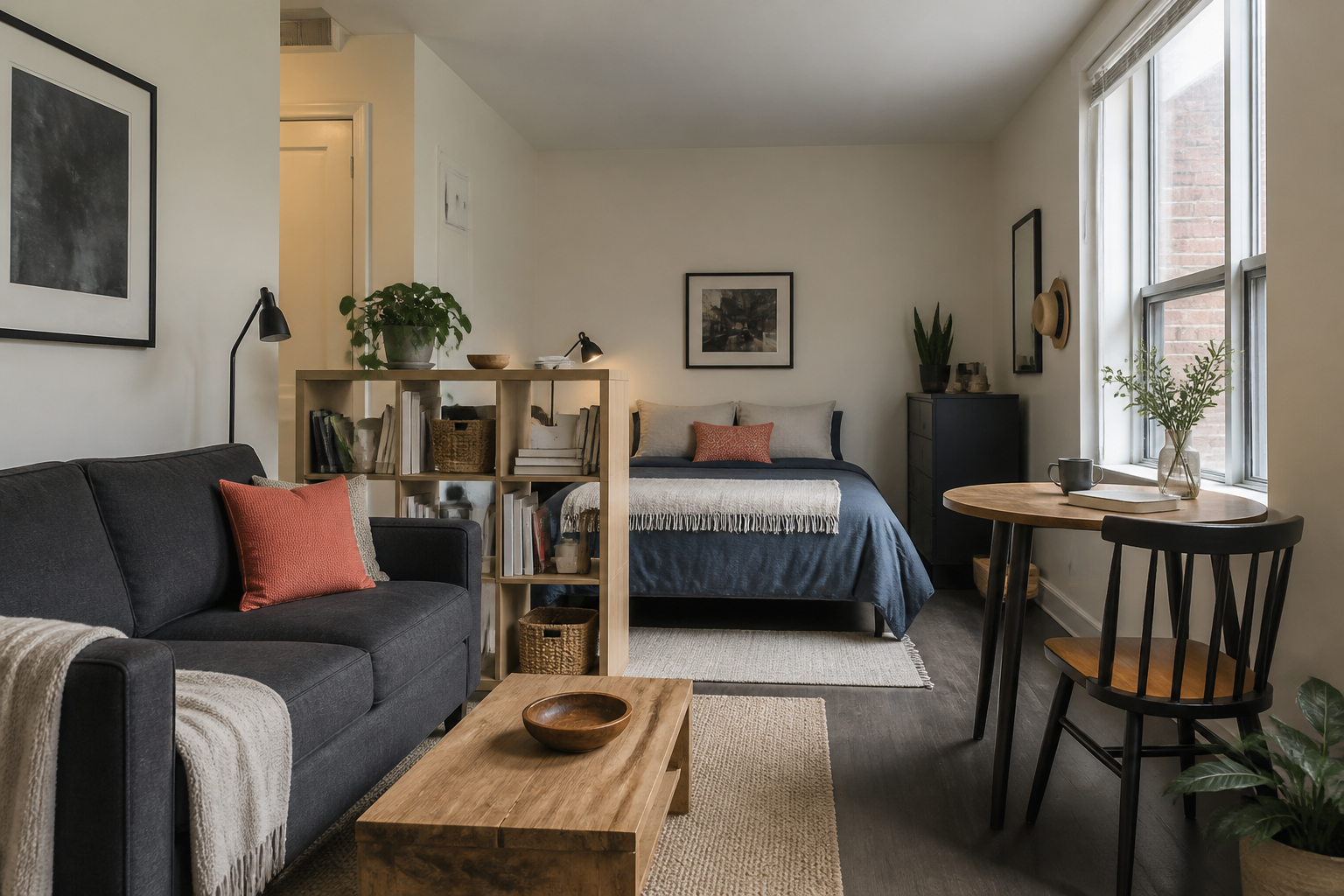
A well-organized home can still lack enough simultaneous space for sleep, work, meals, movement or privacy. That is a real physical constraint, not a personal failure.
How to recognize a genuine space limit
Belongings have stable homes and surfaces can be reset, yet two essential activities cannot happen at the same time. Working blocks meal preparation. Drying laundry removes the only clear route. One person’s rest depends on another person ending a call. The difficulty comes from competing functions, not unmanaged objects.
Another sign is constant conversion. Flexible furniture can help, but a room that must be rebuilt many times a day may be organized and still overworked.
List the essential activities that occur at home during one weekday. Mark which must happen at the same time and which can share a surface at different times. If conflicts remain after belongings are put away, you have found a space constraint rather than a tidying problem.
Four ways to work with a hard limit
Protect the highest-cost function
Prioritize the activity that is most frequent, time-sensitive or difficult to do elsewhere. Give it the most stable zone instead of dividing the room equally.
Separate simultaneous from sequential needs
Only combine functions that happen at different times. A dining table can support work and meals; it cannot do both at once when two people need it.
Reduce conversion steps
Store everything required for a changeover together and nearby. If a bed, table or work zone converts daily, the setup should be short and physically manageable.
Use outside capacity deliberately
When possible, move a specific function—not random belongings—to a shared building space, library, workplace, storage unit or scheduled service. Compare the ongoing cost with the daily friction it removes.
No shelf, folding table or routine can create privacy, daylight or simultaneous floor area. If essential functions still collide, consider whether the home can realistically support the household’s current needs.
Choose an honest improvement
The next step may be a better layout, a simpler conversion, an outside resource or—when feasible—a longer-term housing change. The goal is not to make every tiny home perform like a larger one. It is to spend effort where it can produce a real improvement.
The takeaway
When organization already works, protect essential functions and be honest about the space they require.
Separate a true space limit from storage, furniture and routine problems.
Take the free Small Home Score