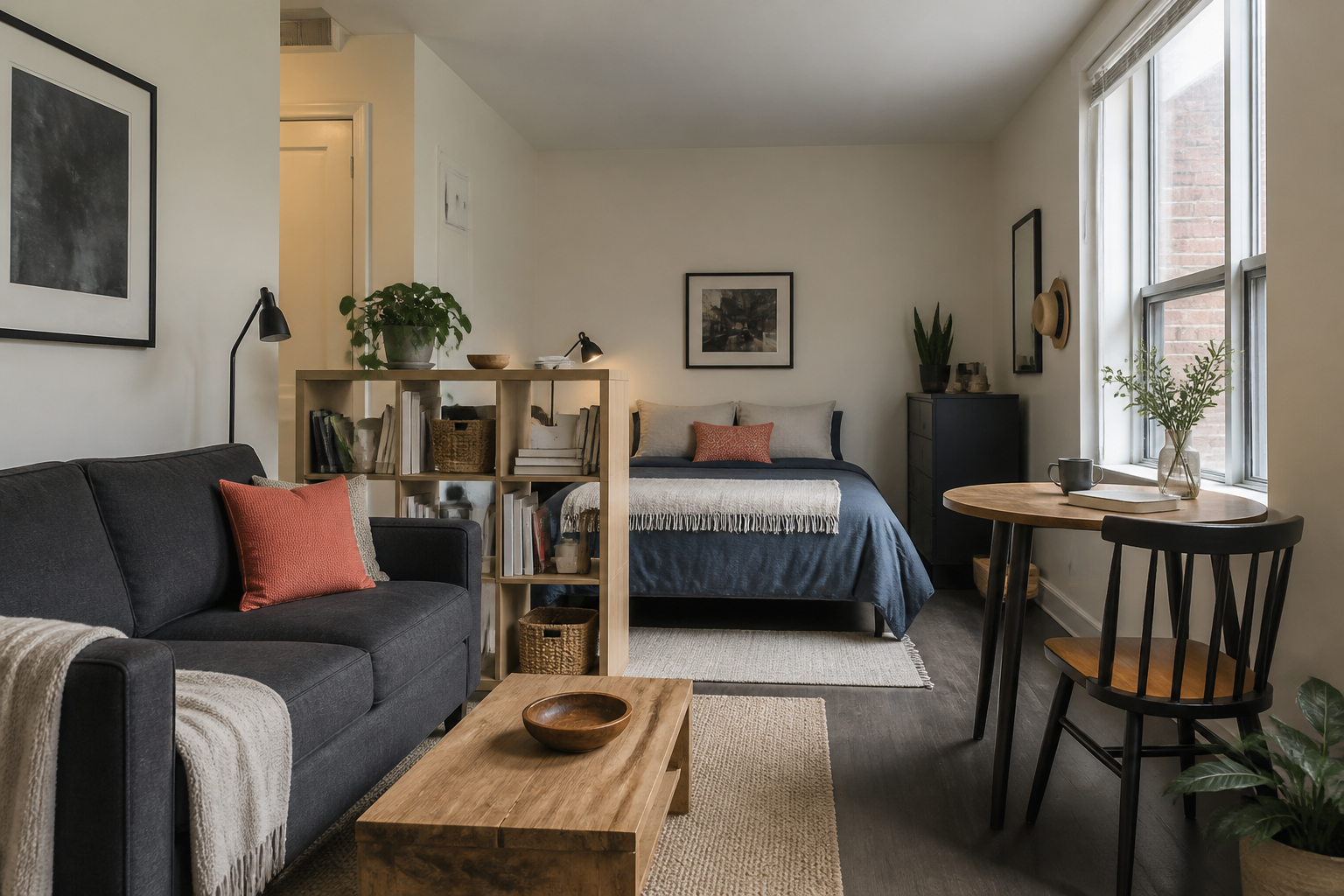
In a studio, the sofa, bed and table do more than fill a room. They define how you enter, move, rest and work. A few layout rules can make the same square footage feel calmer without pretending that every apartment needs a complete redesign.
Map the movement before you move the furniture
Walk from the entry to the bed, kitchen, bathroom and window. Notice where you turn sideways, step around corners or place bags. These repeated routes are the structure of the room. Protecting them first makes every later choice easier.
Choose one main path through the apartment and keep it visibly clear. A room can hold more furniture than it can hold interruptions.
7 rules for a studio that works harder
Keep one direct path from entry to window
Let the longest route in the room remain simple and obvious. Arrange larger pieces so they sit beside the path rather than narrowing it from both sides.
Define zones with furniture, not extra walls
A low bookcase, the back of a sofa, a rug or a table can signal a change of activity while still allowing daylight and sightlines to travel through the room.
Give each zone one primary job
Make the bed a sleeping zone, the table a work-and-meal zone and the sofa a living zone. When one surface tries to do everything at once, clutter returns quickly.
Place the largest pieces at the perimeter
Keep the centre available for movement whenever possible. This is usually a better starting point than pushing every item into a single crowded corner.
Use one piece to create a visual pause
A shelf, curtain or tall plant can soften the view toward a bed or storage area. Choose something that still lets light through and does not become another obstacle.
Let the table earn its footprint
In a studio, a small table should support at least two recurring tasks: meals and work, or meals and preparation. Choose a shape that allows chairs to tuck away after use.
Make the night setup easy to reset
Keep a small landing place for the things used at bedtime, then give morning items a nearby destination. A studio feels calmer when the sleep zone can change back into daytime space quickly.
Test the layout for one ordinary week
Before buying dividers or replacing furniture, live with the revised plan for several days. Cook, work, bring in groceries and make the bed. The useful arrangement is the one that removes repeated friction, not the one that only looks open in a single photograph.
If an item repeatedly blocks a route or becomes a dumping ground, change its position or reduce what it is expected to hold. Small homes improve through specific adjustments, not one dramatic makeover.
The takeaway