The useful question is not “Does this sofa look big?” It is “What does the room stop doing because this sofa is here?”
Four signs furniture is applying too much pressure
You turn sideways on a route used every day. A door, drawer or chair cannot open fully. One piece forces another into a poor position. The room needs a multi-step conversion for a routine that happens often. These are functional costs, not matters of taste.
A substantial bed or sofa may still earn its footprint if it is used heavily and leaves the necessary routes intact. Several “small-space” pieces can create more pressure than one generous piece when their edges and separate access zones fragment the floor.
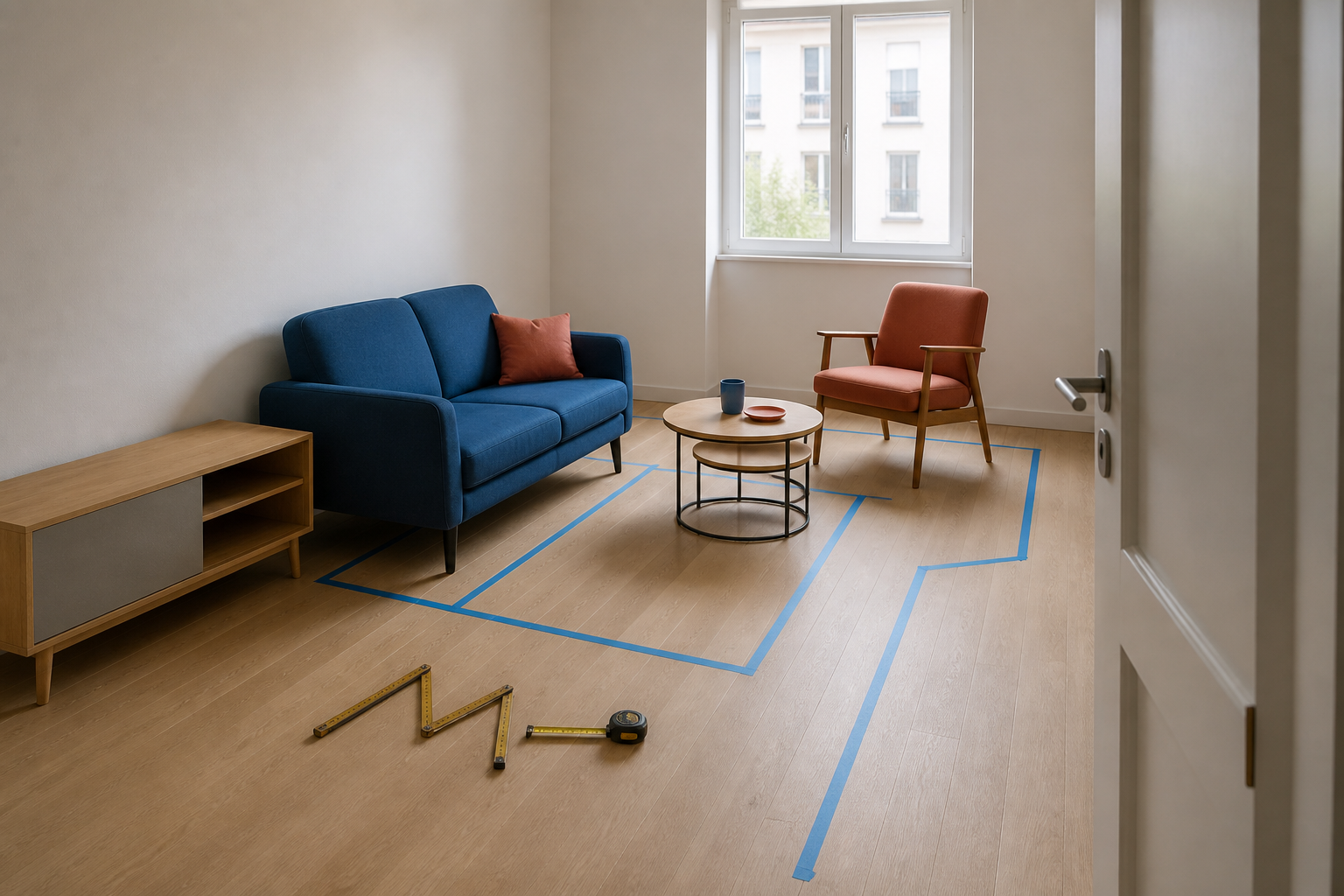
Mark the full footprint of the largest piece with removable painter’s tape, including the space needed to pull out chairs, open doors or convert the item. Walk through the room and perform the nearby routines. The collision points reveal more than the product’s width alone.
Four ways to reduce furniture pressure
Remove the weakest-function piece
Identify the item that occupies meaningful floor area but supports the least frequent or least important task. Test the room without it before replacing anything.
Choose fewer, clearer functions
Let each major zone have one dependable primary purpose. A piece that performs three jobs poorly may create more resetting than two simple pieces.
Reposition before downsizing
Move the largest item beside rather than across the main route. A piece can feel oversized because of placement even when its dimensions are workable.
Measure the operating footprint
For a replacement, record both closed and in-use dimensions. Include handles, recline, leaf extensions, chair pullback and the body space needed to operate it.
Photographs rarely show door swings, chair pullback or the route behind the camera. Tape the advertised open and closed dimensions on your own floor first.
Test the room on an ordinary day
Use the revised arrangement through work, meals, cleaning and evening rest. The right layout is not the emptiest one; it is the one that requires fewer sideways steps, temporary moves and apologies to the furniture.
The takeaway
A piece is too big when its operating footprint costs more daily function than the piece provides.
Measure the balance between furniture, storage, routines and available space.
Take the free Small Home Score