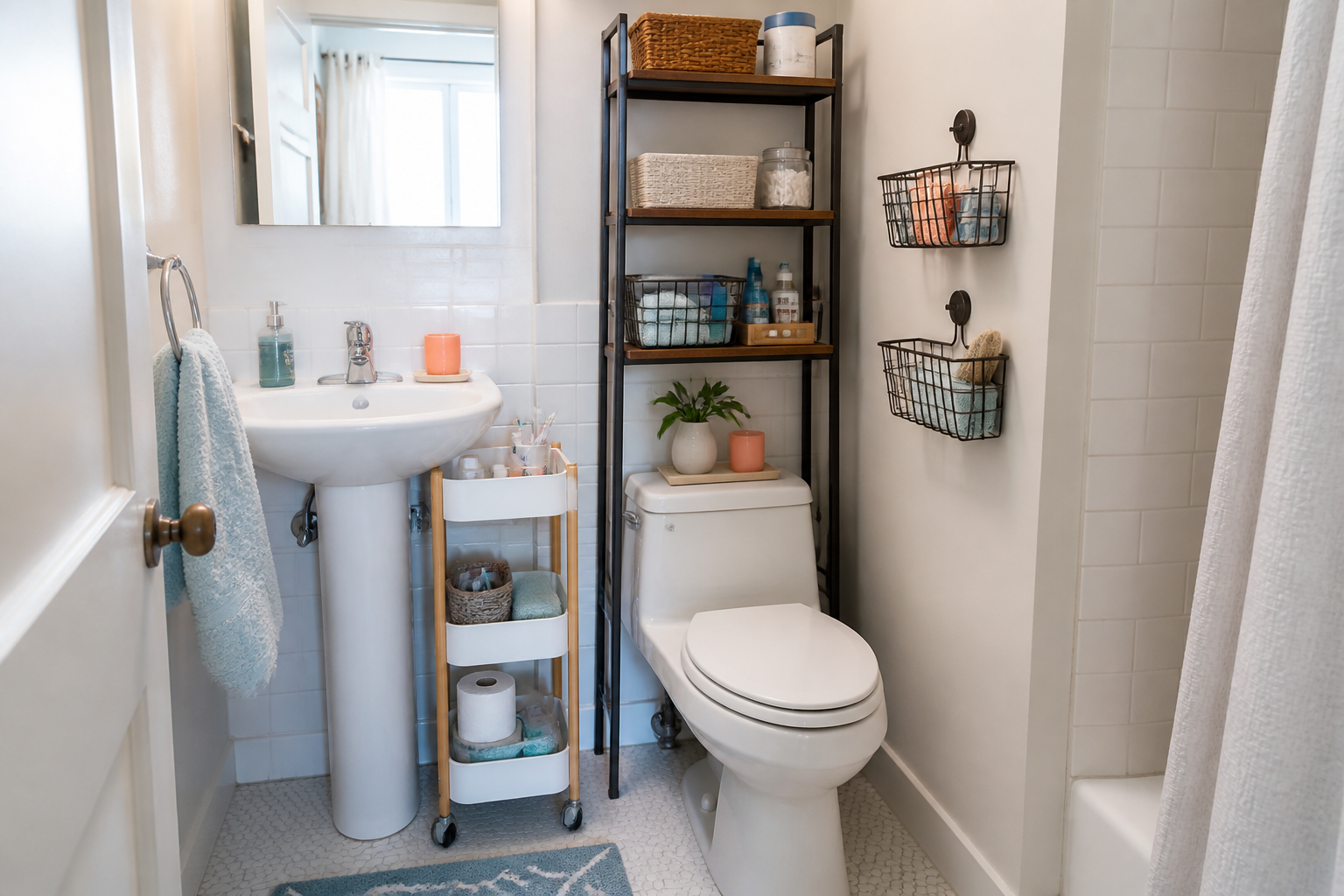
Storage succeeds when the right object can be put away in one easy motion near the place it is used. Total cupboard volume is a poor measure of that.
What a storage mismatch looks like
A deep cabinet holds small items that disappear behind one another. A coat cupboard is across the apartment from the entry. Everyday appliances live behind rarely used serving pieces. A beautifully divided drawer takes two hands and three movements to open. Each setup technically stores things, but it does not support the routine that creates the clutter.
Repeated “temporary” piles are evidence. They show where an object wants to stop and how much effort the household is willing to spend putting it away.
Walk in carrying keys, a bag, a coat and mail. Put each item away exactly as the current system requires. Count doors, lids, steps and objects that must be moved. Anything that needs several actions is competing with the nearest flat surface.
Four ways to make existing storage work harder
Move storage to the point of use
Place hooks where coats come off, towels where they are reached and cleaning supplies near the room they serve. Shorter routes are easier to repeat.
Match depth to the object
Use shallow storage for small, frequently handled items. Reserve deep shelves for large, contained categories so nothing important is hidden behind a second row.
Reduce the number of motions
Remove unnecessary lids, nested containers or tightly packed obstacles from everyday storage. The system should be easy to close as well as easy to open.
Give overflow a decision point
Create one small tray or basket for items that need action, not permanent storage. Empty it on a fixed day so “temporary” does not become a new category.
First relocate one category using containers and furniture you already own. If the clutter stops returning for a week, placement—not volume—was the constraint.
Judge the system by reset time
A useful storage system lets an ordinary room return to working order quickly without careful arranging. Test the change during a busy week. If objects still pause on the same surface, remove another step or move their destination closer.
The takeaway
Good storage follows the routine. It does not ask the routine to bend around it.
See whether storage, furniture, capacity or daily systems are applying the most pressure.
Take the free Small Home Score