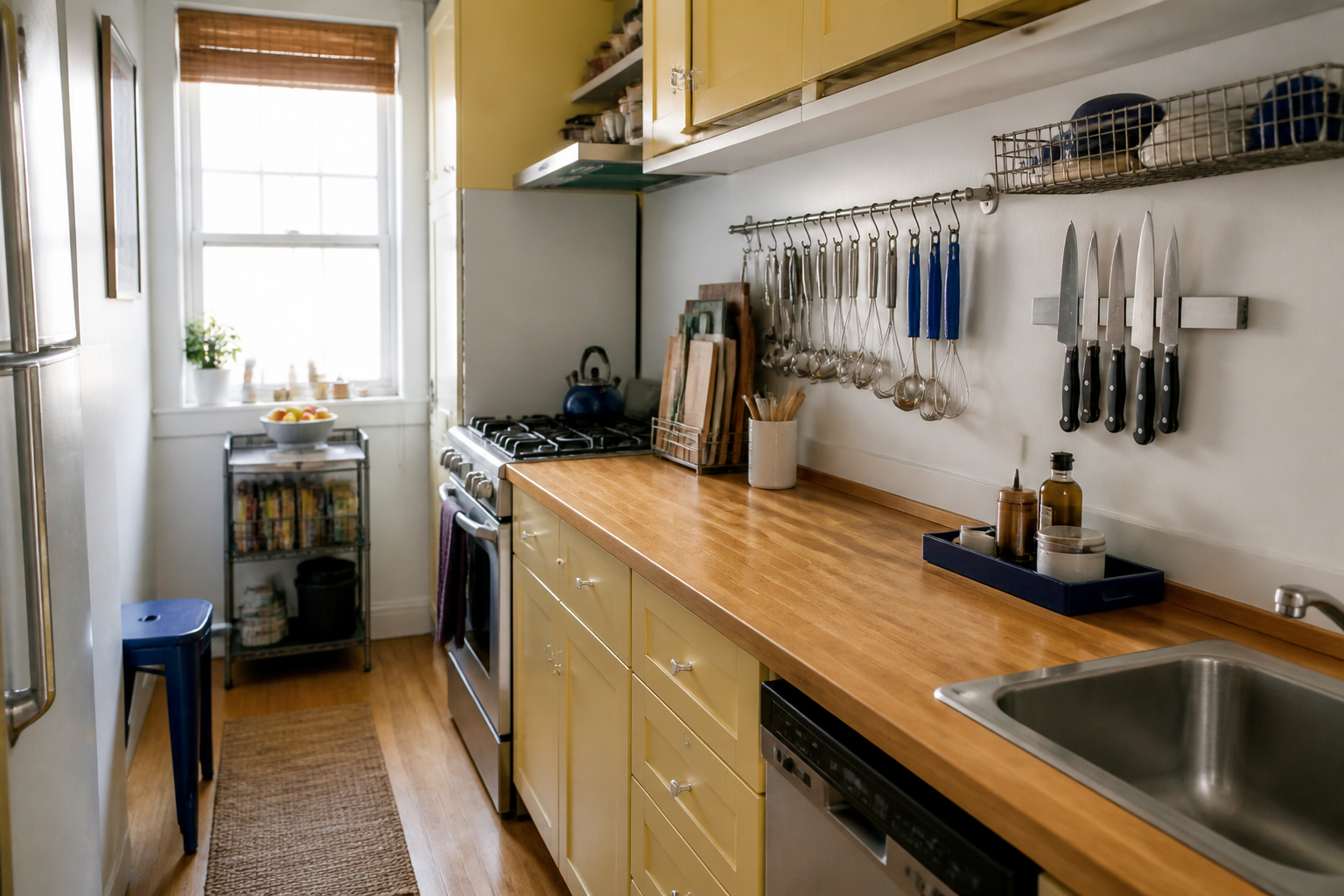
Counter space disappears when storage has no hierarchy. Keep only the tools used every day within arm’s reach, group them by task and give occasional appliances a home away from the preparation zone.
Start with a one-counter reset
Choose the stretch of counter where you chop, mix or plate food. Remove everything, clean it, then return only what directly supports that work. Relocate duplicates, unopened food and rarely used appliances before buying organizers.
Protect one uninterrupted preparation area at least as wide as your largest cutting board. Treat it as working space, not storage.
11 ideas that move storage off the worktop
Install a wall rail for everyday tools
Hang the few utensils you use constantly near the preparation zone. Keep them clear of burners and use fixings appropriate for the wall and expected weight.
Use a magnetic knife strip safely
A properly installed strip can replace a bulky knife block. Mount it away from children, heat and narrow walkways, with handles easy to grasp.
Store cutting boards vertically
A narrow divider inside a cabinet—or a stable rack against the backsplash—makes boards easier to take out without lifting a stack.
Add an under-shelf basket
Slide-on baskets use the air below a cabinet shelf for lightweight items such as cloths, wraps or tea towels. Check door clearance before adding one.
Create one daily-use tray
Group oil, salt and the seasonings used most often on a small washable tray. The boundary prevents bottles from spreading across the counter.
Move appliances by frequency
Keep a daily coffee maker accessible, but relocate the mixer or blender if it is used only occasionally. Store heavy appliances between knee and shoulder height.
Turn a cabinet door into storage
A shallow rack can hold lids, wraps or cleaning cloths. Measure around shelves and hinges so the door still closes without pressure.
Use risers inside cabinets
A shelf riser creates a second level for dishes or pantry staples, making the full cabinet height usable without unstable piles.
Add a narrow rolling cart
When a genuine gap exists, a cart can hold pantry backups or appliances and roll out when needed. Measure the handle and wheel clearance as well as the frame.
Contain the sink zone
Keep soap and a brush on one draining tray, then hang cloths inside the cabinet or on a rail so the wet zone does not spread.
Use the top of the refrigerator selectively
Reserve this high space for lightweight, infrequently used items in one stable bin. Leave required ventilation clearance and never store flammable or heat-sensitive products there.
Build zones around the way you cook
Place prep tools near the clearest counter, cooking tools near—but not over—the stove, and cleaning items near the sink. A small kitchen becomes easier when each movement has a short path and one storage destination.
Finish by leaving space between objects. Empty counter is not wasted capacity; it is the surface that lets the kitchen perform its actual job.
The takeaway