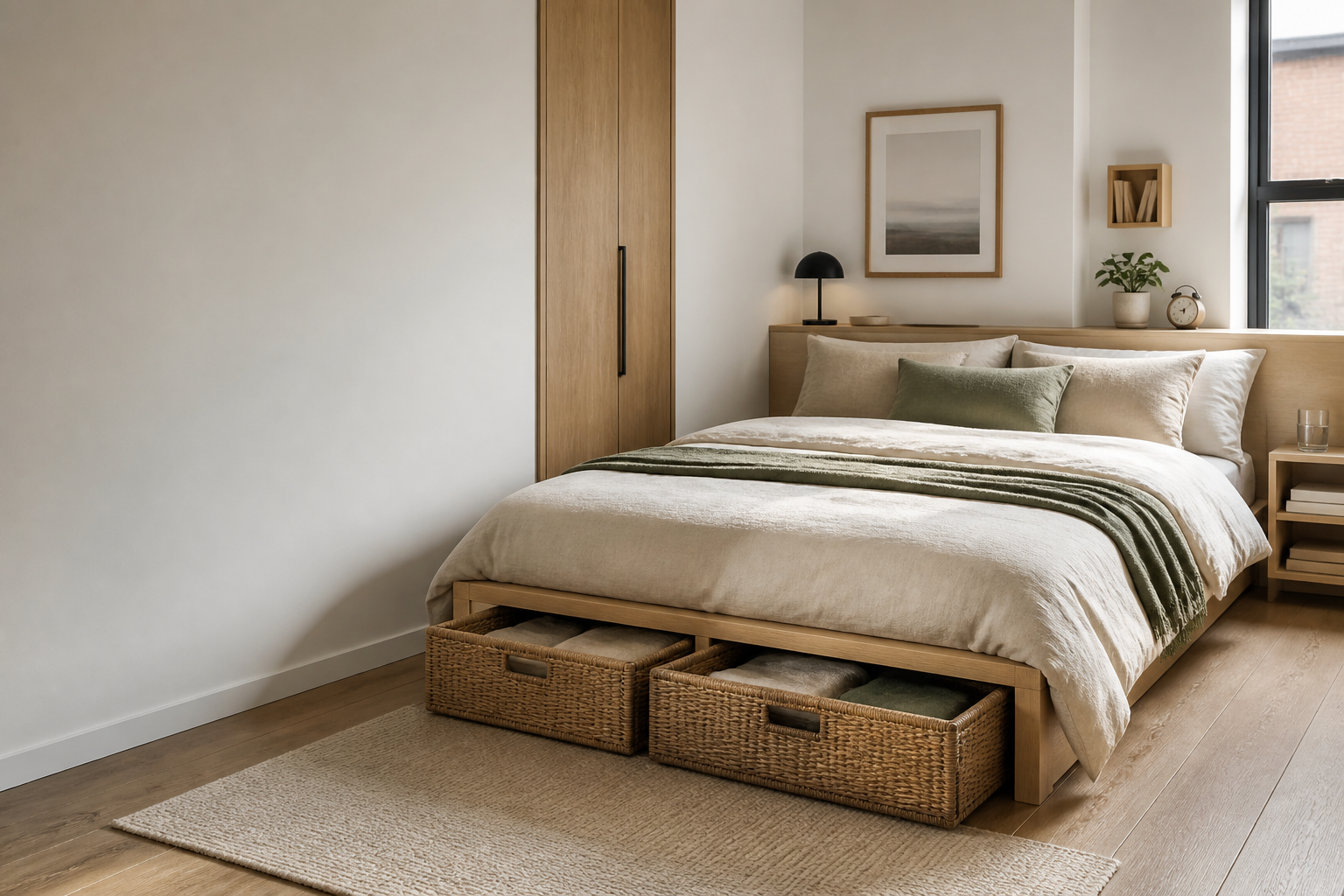
Under-bed storage works best when it behaves like a drawer, not a forgotten attic. Keep frequently used items easy to pull out and reserve sealed containers for seasonal things.
Before you buy: measure three things
Measure the clear height from the floor to the lowest part of the bed frame, the usable width between legs or supports, and the depth you can reach comfortably. Leave roughly an inch of clearance so containers do not scrape or snag.
If you cannot pull the container out without moving furniture, it is too large for everyday storage.
10 ideas that make the space work harder
Low rolling drawers
Best for clothes, linens and anything you reach for weekly. Wheels make heavier loads manageable; choose recessed handles that will not catch on bedding.
Soft zippered bags
A flexible, affordable option for spare bedding and out-of-season clothes. Look for a clear top so you can see what is inside.
Matching woven baskets
Ideal when the space is visible. Use liners to protect fabric from rough fibers and dust.
Vacuum bags inside a rigid bin
Compress bulky duvets or winter coats, then place the bag in a bin so it slides cleanly and stays protected.
A dedicated shoe drawer
Store occasional shoes heel-to-toe in a shallow covered box. Add a small moisture absorber if your room is humid.
Divided organizers
Fabric compartments stop accessories, workout gear or children’s clothes from turning into one mixed pile.
Flat archival boxes
Use acid-free boxes for photos, letters and important keepsakes. Keep irreplaceable paper away from damp floors.
One open tray for daily items
A simple wooden tray can hold a yoga mat, slippers or a laptop sleeve without making them feel hidden away.
Bed risers—only when needed
A small lift can unlock useful storage, but check stability and the manufacturer’s guidance first. Avoid stacking improvised blocks.
Built-in lift-up storage
For a future bed purchase, an ottoman-style frame offers the most capacity with the least visible clutter—especially in very narrow rooms.
Choose the system you will maintain
For weekly access, choose wheels or a smooth tray. For seasonal items, use sealed, labeled containers. If dust collects quickly, skip open baskets. And resist filling every inch: a little airflow and one clear retrieval path make the whole system easier to live with.